

By Gareth Ellis RIBA, Associate Architect at CAD Architects
Why consider a barn conversion in Cornwall?
A barn conversion in Cornwall offers the opportunity to create a unique, design-led home in a sought-after rural setting.
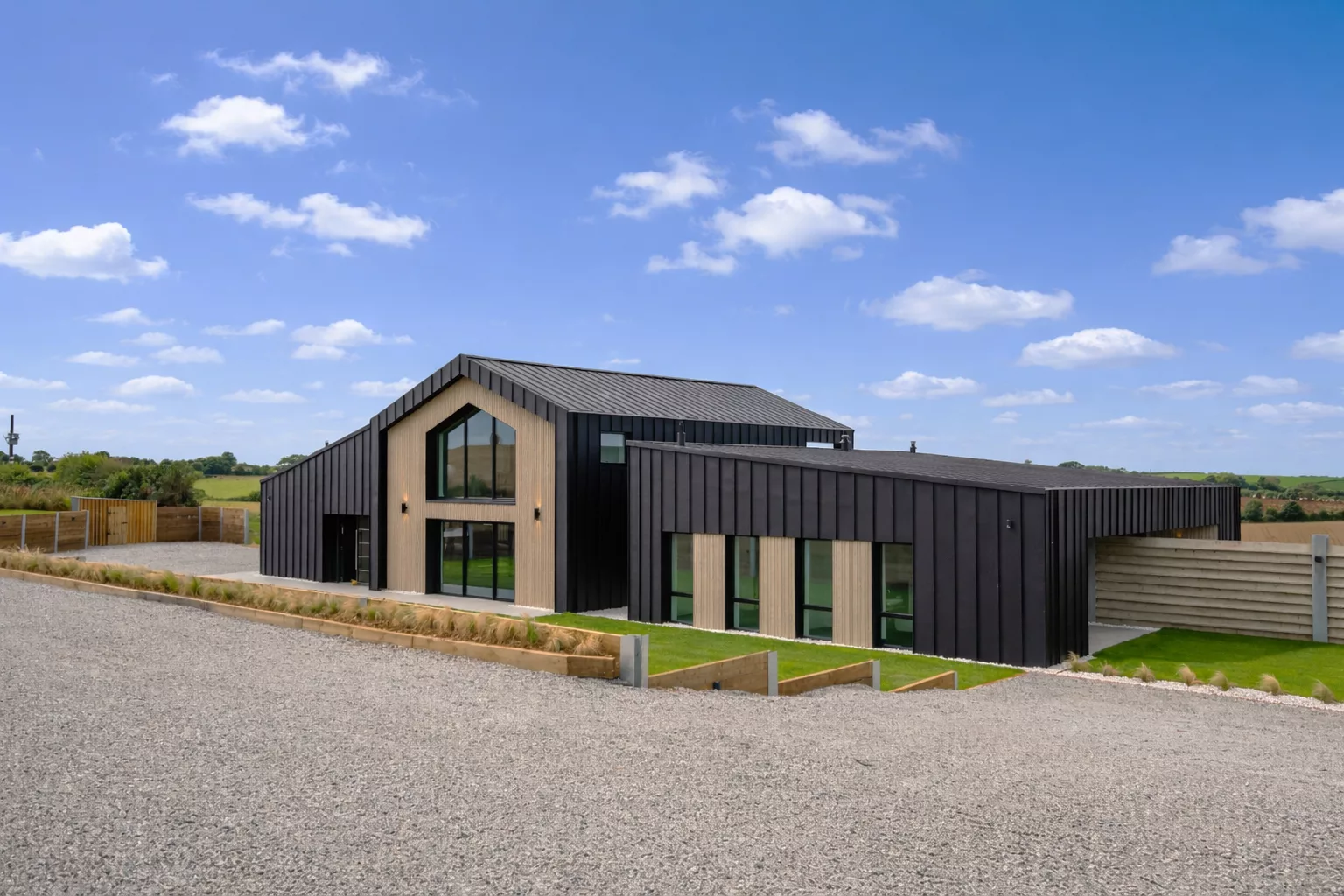
While traditional stone barns are often associated with rustic charm, barn conversions are no longer limited to historic buildings. Modern agricultural structures — including portal frame buildings — provide excellent potential for creating striking contemporary homes with open-plan layouts and expansive glazing.
The rise in Class Q permitted development has made converting agricultural buildings more accessible. Introduced in 2014, Class Q allows the change of use from agricultural to residential without full planning permission, subject to specific criteria.
Key Class Q updates (2024)
- Up to 10 dwellings per conversion (previously 5)
- Maximum floorspace increased to 1000m² (previously 865m²)
- New allowance for limited rear extensions
Even under Class Q, local authorities must be notified and can intervene where necessary.
Benefits of barn conversions
A well-designed barn conversion offers flexibility, character, and long-term value.
Key benefits include:
- Spacious interiors with high ceilings
- Rural locations with countryside views
- Robust structures suitable for adaptation
- Design flexibility for bespoke layouts
- Strong resale value when completed to a high standard
Traditional barns often feature stone walls and exposed timber, while portal frame barn conversions offer wide, uninterrupted spans - ideal for modern, open-plan living.
At CAD Architects, we specialise in barn conversions across Cornwall and the South West, working with both traditional and modern agricultural buildings.
Contemporary barn conversion design
A successful contemporary barn conversion balances the building’s agricultural origins with modern design.
Recent projects have demonstrated how simple materials - such as corrugated metal cladding, steel, timber, and glass - can be used to transform agricultural buildings into high-quality homes. Large areas of glazing can frame views of the Cornish landscape while introducing natural light throughout the interior.
This approach is particularly effective in portal frame agricultural buildings, where the structure allows for greater design freedom and larger openings.
What makes a successful barn conversion?
- Structural assessment
A thorough structural survey is essential for any barn conversion project.
- Traditional barns may require stabilisation of walls and roof structures
- Portal frame buildings typically have strong steel frames but require assessment of foundations, floor slabs, and load capacity
You will also need to consider access, drainage, and connections to utilities early in the process.
Additional requirements may include:
- Bat and Barn Owl Surveys
- Ecological assessments
- Phase I Contaminated Land reports
- Architectural design
The design approach should respond to the type of agricultural building.
- Traditional barn conversions often retain original features such as stone walls and timber beams
- Portal frame conversions allow for open-plan layouts, mezzanines, and full-height glazing
The most successful designs combine contemporary materials with the building’s original structure to create a cohesive, high-quality home.
If your project is in Cornwall, it is also important to review local guidance on barn conversions in the countryside at an early stage.
- Insulation and energy efficiency
Agricultural buildings were not designed for residential use, so thermal upgrades are critical.
Modern insulation systems, combined with technologies such as:
- Air source heat pumps
- Solar panels
can significantly improve energy efficiency and reduce long-term running costs.
- Maximising natural light
Introducing natural light is a key part of any barn conversion design.
Options include:
- Glazed gable ends
- Bi-fold or sliding doors
- Rooflights and skylights
In portal frame barn conversions, large structural openings can often be introduced more easily, creating bright, open living spaces.
- Class Q extensions
Recent updates to Class Q permitted development allow for a single-storey rear extension, provided:
- It is located at the rear of the building
- Built on existing hardstanding (pre-July 2023)
- Does not extend more than 4 metres
This can add valuable additional space to your conversion.
- External design and landscaping
The surrounding landscape plays an important role in the success of a barn conversion in Cornwall.
Well-designed external spaces can include:
- Gardens and terraces
- Outdoor seating areas
- Planting schemes or orchards
A considered landscape design enhances both the setting and the overall value of the property.
Traditional vs portal frame barn conversions
Barn conversions now span a wide range of building types:
- Traditional barns — character, heritage, and natural materials
- Portal frame buildings — flexibility, scale, and contemporary design potential
Both offer unique opportunities, and the right approach depends on the building, location, and your vision.
At CAD Architects, we design bespoke barn conversions in Cornwall, helping clients unlock the full potential of agricultural buildings — from historic structures to modern steel-framed barns.
Start your barn conversion project
If you are considering a barn conversion in Cornwall or the South West, our experienced team can guide you through every stage — from feasibility and Class Q advice to detailed architectural design.
Call us on 01872 630040 or email studio@cadarchitects.co.uk